How to Specify Lens Silicone Sealing Rings for Underwater Drone Camera Lenses
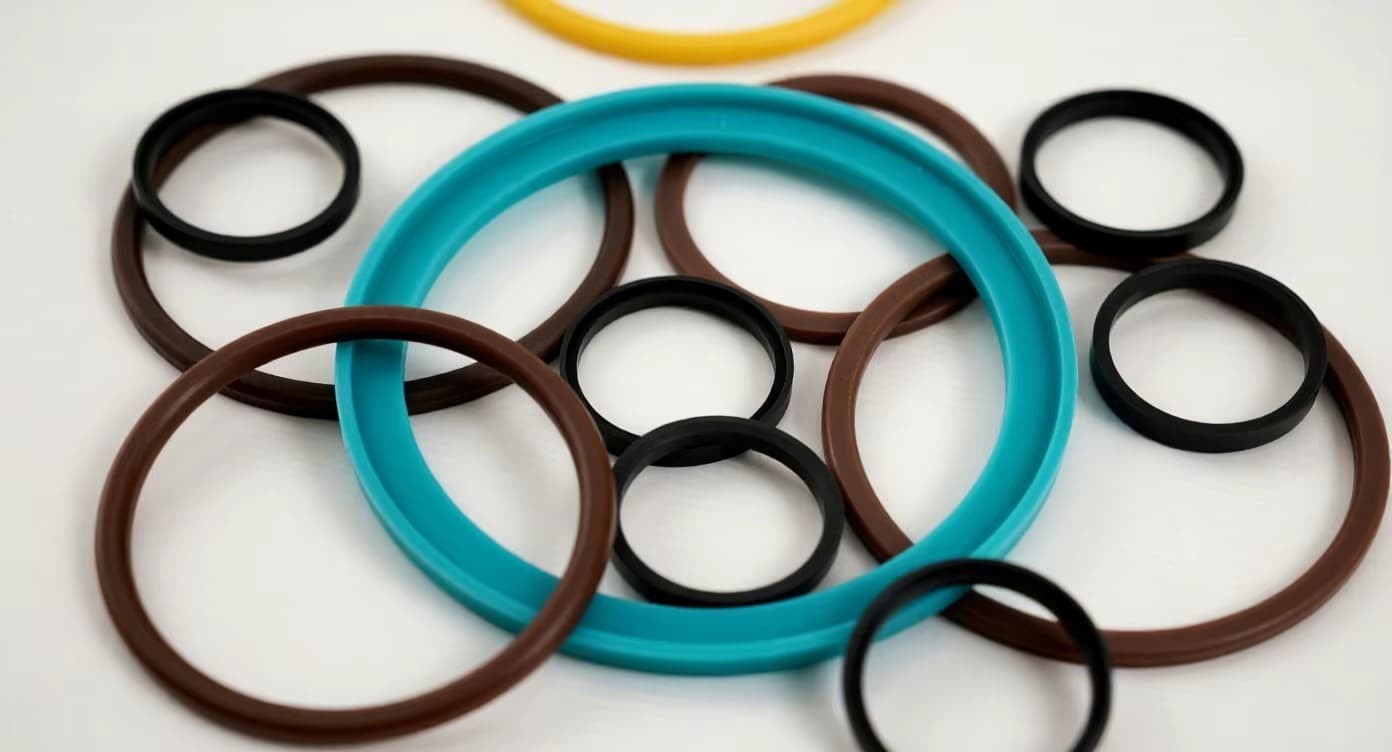
Specifying the correct lens silicone sealing rings for underwater drone cameras is a mission-critical task. A poor seal means water ingress, ruined optics, and expensive ROV downtime. This guide walks you through the engineering parameters, material choices, and testing requirements — helping you source reliable seals from FromRubber.
Underwater drones (ROVs) operate in some of the most punishing environments: deep pressure, saltwater corrosion, temperature shifts, and constant vibration. The camera lens port is especially vulnerable — it's the eye of the vehicle. Unlike generic O-rings, properly specified lens silicone sealing rings must balance compression set resistance, optical clarity protection, and long-term durability. As a specialized silicone manufacturer, FromRubber has helped dozens of underwater drone OEMs develop custom sealing solutions. Here's exactly how to specify yours.
Step 1: Define Operating Depth & Pressure Requirements
The first specification is hydrostatic pressure. Depth directly impacts seal compression and potential extrusion. Use this quick reference:
| Depth Range | Pressure (bar / psi) | Recommended Seal Hardness (Shore A) | Backup Ring Needed? |
|---|---|---|---|
| 0 – 30 meters | ≤ 3 bar (44 psi) | 50 – 60 Shore A | No |
| 30 – 100 meters | ≤ 10 bar (145 psi) | 60 – 70 Shore A | Recommended for dynamic seals |
| 100 – 300 meters | ≤ 30 bar (435 psi) | 70 – 80 Shore A | Yes (PTFE backup ring) |
For most underwater drone cameras, depths range from 50m to 150m. Lens silicone sealing rings from FromRubber can be formulated to 80 Shore A for deep-rated housings, while still maintaining flexibility.
Step 2: Select the Right Cross-Section & Groove Geometry
Standard O-rings (circular cross-section) work for many static lens ports, but custom profiles often perform better in underwater drones. Consider these options:
- Rectangular / D-shaped seals: Increased contact area, better resistance to twisting during assembly.
- X-rings (Quad-rings): Four sealing lobes reduce friction and provide redundant barriers.
- Custom molded gaskets: For non-circular lens ports (e.g., rectangular camera windows).
FromRubber engineers calculate optimal groove dimensions based on your housing material (acrylic, polycarbonate, aluminum). Key parameters we need: gland depth, gland width, corner radii, and surface finish (recommended Ra ≤ 0.8 μm).
Step 3: Choose Material Grade — High-Purity & Low Outgassing
Underwater drone cameras are sealed systems; any outgassing from lens silicone sealing rings can condense on the internal lens surface, causing fogging. Standard silicone often contains cyclic siloxanes (D3–D6) that volatilize over time. FromRubber offers:
- Platinum-cured, post-baked silicone: TML < 0.1%, CVCM < 0.01% (ASTM E595) — NASA low-outgassing certified.
- Translucent or custom colors: For optical inspection of seal placement.
- FDA-grade options: If the drone is used in potable water or aquarium applications.
Step 4: Verify Saltwater & Chemical Resistance
Underwater drones operate in oceans, brackish water, and even chlorinated pools. Lens silicone sealing rings must resist hydrolysis, salt corrosion, and biofouling. FromRubber's standard underwater-grade silicone passes:
- 1000-hour salt spray test (ASTM B117) — no cracking or property loss.
- UV weathering (xenon arc, 500h) — for drones used in shallow, sunlit waters.
- Resistance to common anti-fouling agents (mild acids, chlorine).
Depth & Pressure
Specify max depth + safety margin. Hardness 50–80 Shore A based on pressure.
Groove Design
Provide housing drawings. FromRubber optimizes fill ratio and squeeze.
Material Purity
Choose low-outgassing, platinum-cured silicone for fog-free optics.
Environmental Tests
Require salt spray, thermal shock, and UV resistance validation.
Step 5: Dimensional Tolerances & Custom Tooling
Underwater drone lens ports often have tight clearances. FromRubber manufactures lens silicone sealing rings with tolerances as tight as ±0.03mm for critical diameters. When specifying, include:
- Inner diameter (ID), outer diameter (OD), cross-section (CS) with tolerances.
- Flash-free requirement (important for optical sealing surfaces).
- Surface finish: smooth or matte (matte reduces adhesion to housing during opening).
For custom profiles, we design and fabricate injection molds within 3-4 weeks. Prototype tooling (aluminum) available in 10 days for functional testing.
Step 6: Specify Testing & Validation Protocols
Don't rely on generic certifications. For underwater drone lenses, require these specific tests from your supplier:
- Hydrostatic pressure test: Seal installed in actual housing, pressurized to 125% of max depth for 24 hours.
- Compression set (ASTM D395): ≤ 20% after 22h at 100°C — ensures long-term sealing force.
- Outgassing (ASTM E595): CVCM < 0.01% for optical clarity.
- Salt spray resistance (ASTM B117): 500h minimum, no visible degradation.
- Thermal cycling: -20°C to +60°C, 50 cycles, no leakage.
FromRubber provides full test reports with each production batch. We can also perform customer-specified validation using your housing assemblies.
Specification Checklist: Download & Send to FromRubber
| Parameter | Your Requirement | FromRubber Recommendation |
|---|---|---|
| Max depth / pressure | _______ meters / bar | Add 25% safety margin |
| Seal cross-section shape | ○ Round ○ D-shape ○ Rectangular ○ Custom | D-shape for high pressure |
| Hardness (Shore A) | _______ | 50-60 (shallow) / 70-80 (deep) |
| Outgassing requirement | ○ Standard ○ Low (ASTM E595) | Low for all optical housings |
| Saltwater exposure | ○ Yes ○ No | Require 1000h salt spray test |
| Quantity per year | _______ pieces | FromRubber supports low MOQ to high volume |
Why FromRubber Is Your Underwater Drone Sealing Partner
Unlike generic gasket suppliers, FromRubber specializes in lens silicone sealing rings for demanding optical and marine applications. Our advantages include:
- In-house compounding: We formulate silicone for specific depths, temperatures, and chemical exposures.
- Cleanroom molding: ISO 7 (Class 10,000) cleanroom prevents particle contamination on optical seals.
- Rapid iteration: 3D-printed sample seals within 5 days for form-fit testing.
- Global shipping & support: FromRubber ships to underwater drone manufacturers worldwide, with technical support included.
Ready to specify your lens silicone sealing rings?
Send FromRubber your housing drawings and operating depth — we'll return a detailed specification sheet, material recommendation, and sample proposal within 48 hours.
Request Specification Consultation →nani..........com | Custom quotes for ROV manufacturers
Frequently Asked Questions
Q: Can I use the same silicone seal for both lens port and battery compartment?
A: Yes, but battery compartments may require higher hardness (70-80 Shore A) due to larger cover flex. FromRubber can supply different hardness ratings for the same drone model.
Q: How often should lens silicone sealing rings be replaced in commercial ROVs?
A: With proper specification (low compression set, saltwater-resistant), FromRubber recommends replacement every 2-3 years or 500 dive hours. We offer replacement kits with installation guides.
Q: Do you provide seals for non-circular lens ports (e.g., square GoPro-style windows)?
A: Absolutely. We custom-mold gaskets to any 2D profile. Send us a DXF or STEP file for quotation.
Q: What documentation do you provide for quality assurance?
A: Material certificate (batch-specific), dimensional inspection report, hardness and tensile test results, and optional outgassing or pressure test reports.
Summary: Specifying lens silicone sealing rings for underwater drone cameras requires careful attention to depth, groove design, material purity, and environmental validation. By following this 6-step guide and partnering with FromRubber, you ensure your ROV's camera stays dry, clear, and reliable — dive after dive. Contact us today to start your specification.