
FromRubber Custom Exquisite Printing Silicone Label for Clothes/Cap/Shoes


- group name
- Custom Silicone Label
- Min Order
- 1 piece
- brand name
- FromRubber Silicone & Plastic OEM Manufacturer
- Nearest port for product export
- FOB shenzhen
- Delivery clauses under the trade mode
- FOB, CFR, CIF, EXW, FCA, DDP, Express Delivery
- Acceptable payment methods
- T/T, D/P D/A, Credit Card, PayPal, Westem Union, Cash
- update time
- Fri, 13 Nov 2026 12:10:12 GMT
Paramtents
Design 3D Drawings or Objects
Molding Muti Color Molding
Service Free Consult
MOQ 1000pcs
Application Clothes/Cap/Shoes
Packging & Delivery
-
Min Order1 piece
Briefing
Detailed
Printed Silicone Labels for Clothing, Caps and Shoes: Where Conventional Print Fails
Printing on silicone is not printing on fabric. Silicone has one of the lowest surface energies of any substrate, so ink that bonds to cotton will sit on silicone and wait to be rubbed off. This page explains how silicone ink systems, cure windows and artwork limits interact, and how a printed label is specified so it still looks correct after repeated washing.
Why Conventional Ink Fails on a Silicone Label
Low surface energy and the adhesion problem
Adhesion depends on the ink wetting the substrate and forming chemical or mechanical bonds with it. Silicone resists wetting, so conventional inks bead and form a film that is only physically resting on the surface. It can look perfect at inspection and fail on the first wash, usually at the edge of a solid area where the film is thickest.
Silicone-based inks solve this by bonding to the same chemistry they are printed on. That is the reason a printed silicone label is specified with the ink system rather than with a colour name: the ink and the substrate have to be a matched pair, and changing one without the other is the most common cause of a print that peels.
- Specify a silicone ink system, not a generic textile ink
- Treat ink and substrate as a matched pair in any change
- Inspect the print after washing, not only after printing
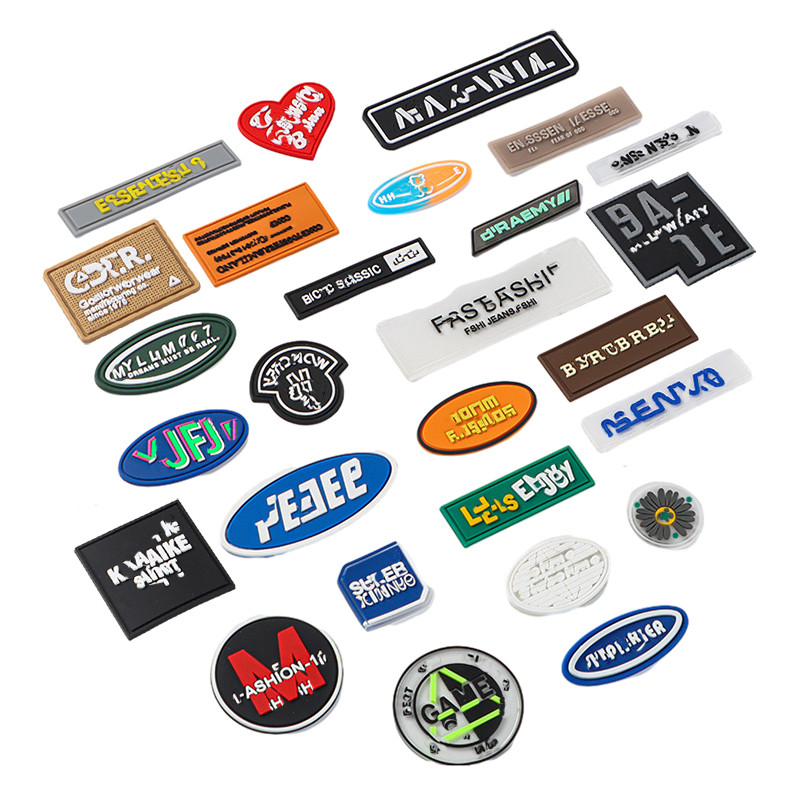
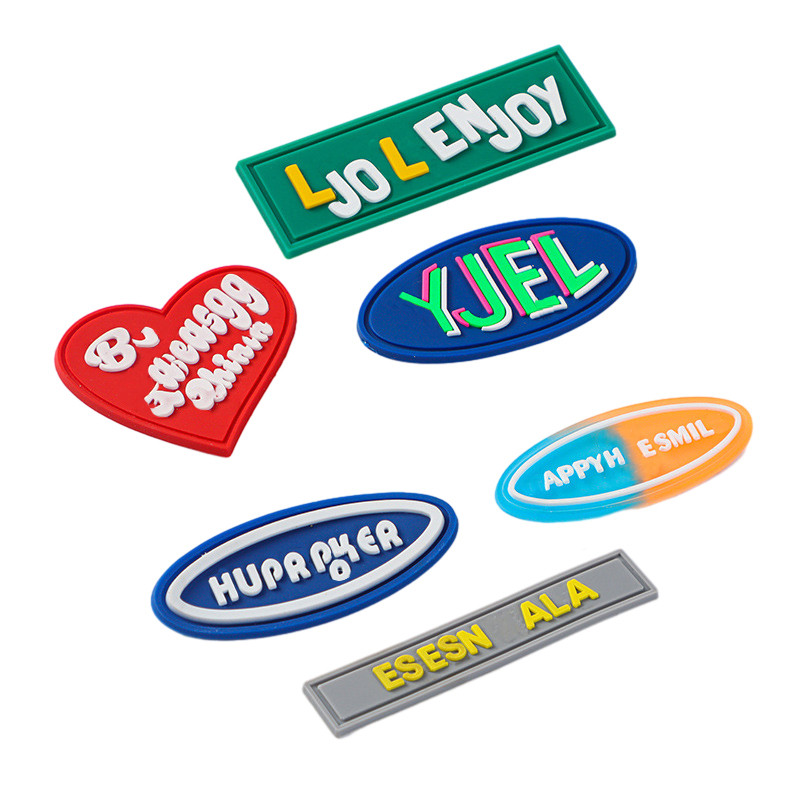
Cure Window and Adhesion
Under-cure versus over-cure
Silicone ink cures by heat, and the window between under-cure and over-cure is narrower than most printers expect. Under-cured ink feels tacky, smears under a thumb and fails a rub test within a few cycles. Over-cured ink becomes brittle, loses elongation and cracks when the label flexes with the garment.
Because the label itself is elastomeric, the ink has to remain elastomeric too. A cure that is correct on a flat test piece can be wrong on a label with a raised edge, where the ink film is thicker and needs more time at temperature. The useful verification is a stretch test on the finished label, followed by a rub test on the same sample.
- Verify cure on the finished label, not on a flat test piece
- Stretch the label before rubbing it
- Re-check cure when ink thickness changes
Colour, Halftone and Fine Detail Limits
What screen printing can hold
Screen printing gives strong, opaque solids and crisp symbols, which suits logos and size marks. It does not reproduce photographic gradients well, because a halftone dot on an elastomeric surface moves as the label stretches and the dot pattern becomes visible. Where a gradient is required, it is normally approximated with a limited number of solid tones or with a moulded texture that shades under light.
Fine detail has a practical floor. Very thin lines break up in the mesh and become thinner still when the label stretches, so a design that relies on hairline strokes is redrawn with a heavier weight before printing. Minimum line width and minimum gap are the two numbers to agree at artwork review.
- Approximate gradients with solid tones or moulded texture
- Agree minimum line width and gap at artwork review
- Design for the stretched state, not the flat state
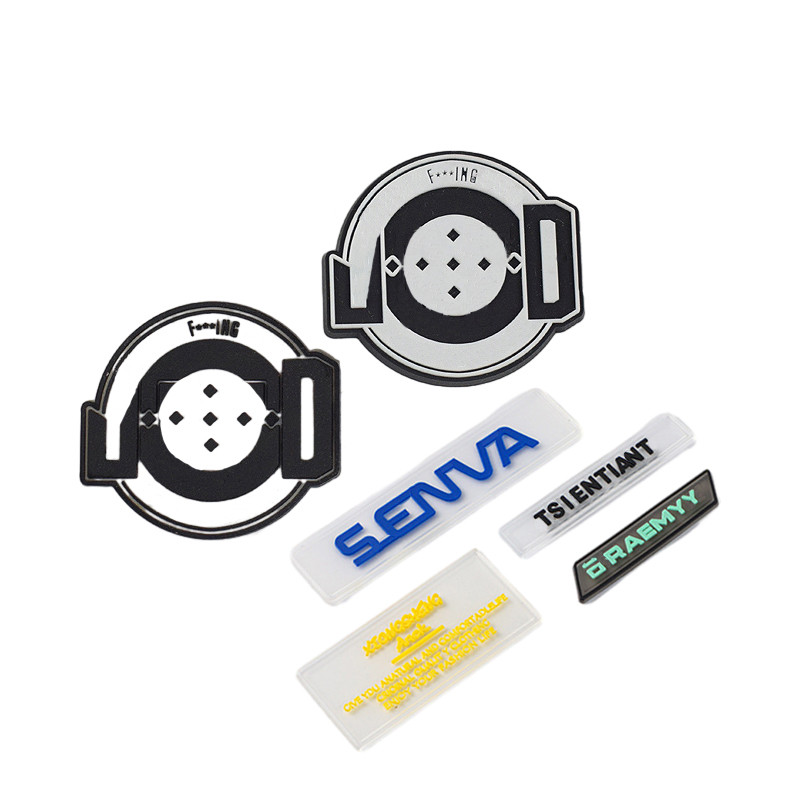

Wash and Rub Durability
A protocol that reflects the garment
The durability of a printed label is decided by three variables: wash temperature, detergent chemistry and mechanical action. A print that survives a gentle cold wash can fail in a hot wash with a biological detergent, and the difference appears at the edges of the print first. The protocol should state all three, and the number of cycles should match the garment's expected life rather than a generic figure.
Rub testing completes the picture. A printed label on a shoe tongue is abraded by laces and by the other shoe; a label inside a collar is abraded by the neck. Testing with a defined abrasive and load, on the actual label geometry, is more informative than a visual check after washing.
- State temperature, detergent and mechanical action together
- Match cycle count to the garment's expected life
- Rub test in the direction the wear actually occurs
Printed Silicone Label Specification Fields
Ink system, cure schedule and artwork limits are agreed at artwork review; wash and rub acceptance is agreed with the garment buyer.
- Part type
- Printed silicone label
- Substrate
- Silicone label, moulded flat or with light relief
- Ink
- Silicone-based ink matched to the substrate
- Cure
- Schedule defined for the printed film thickness
- Colours
- Solid colours; gradients approximated with tones or texture
- Minimum line
- Line width and gap agreed at artwork review
- Backing
- Heat transfer, sewing or adhesive per attachment
- Wash testing
- Temperature, detergent and cycle count stated
- Rub testing
- Abrasive and load defined, tested on label geometry
- Design input
- Vector artwork at final size plus the label drawing
- Minimum order
- 1000 pcs for this product family
Questions About Printing on Silicone Labels
Can you print a full-colour gradient?
A photographic gradient is approximated rather than reproduced, because halftone dots move when the label stretches. The usual approach is a small number of solid tones, or a moulded texture that shades under light.
Why does print peel off a silicone label?
Because the ink did not bond to the substrate. Silicone needs a silicone-based ink system; conventional textile ink sits on the surface and lifts at the edge of a solid area, usually after the first wash.
Can white be printed on a dark label?
Yes, with an opaque silicone ink and a print thickness that covers the base colour. The thicker film needs a cure schedule matched to it, otherwise the white will rub off before the surrounding colour does.
How many washes should a printed label survive?
The cycle count is set by the garment's expected life and the care label, not by a universal number. The protocol should state temperature, detergent and mechanical action, because all three change the result.
Send the Artwork at Final Size
Share the vector artwork, the label drawing and the garment care instructions. The review returns the feasible line widths, ink system and cure schedule, and the wash and rub protocol to agree with the garment buyer.