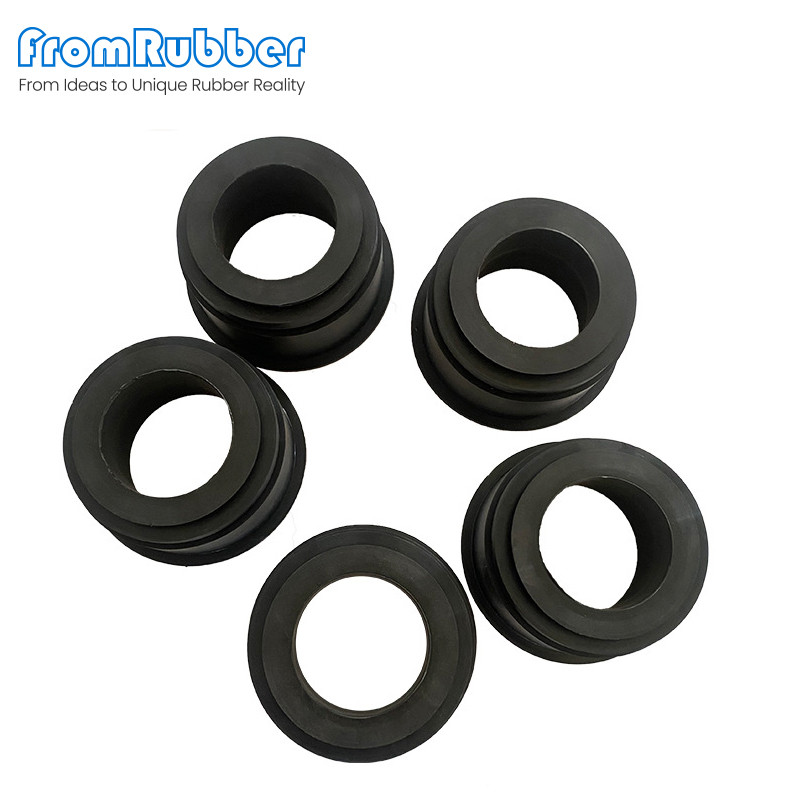
Durable Small Molded Rubber Gaskets for Instrument Sealing Needs


- group name
- Custom Silicone Seals
- Min Order
- 10000 piece
- brand name
- FromRubber Silicone & Plastic OEM Manufacturer
- model
- BH-auto15
- Nearest port for product export
- FOB shenzhen
- Delivery clauses under the trade mode
- FOB, CFR, CIF, EXW, FCA, DDP, Express Delivery
- Acceptable payment methods
- T/T, D/P D/A, Credit Card, PayPal, Westem Union, Cash
- update time
- Fri, 13 Nov 2026 12:13:56 GMT
Paramtents
Product Name Rubber Gaskets
Material Rubber Silicone
Color Black,Custom
Shape Customise
Feature Durable Small
Application Instrument Sealing
Sales Method Molded Custom
Consultation Email Suey@fromrubber.com
Packging & Delivery
-
Min Order10000 piece
Briefing
Detailed
Custom Silicone Seals / Instrument Enclosures
Durable Small Molded Rubber Gaskets for Instrument Sealing Needs: Fill Ratio, Set and Flash
A small molded gasket in an instrument enclosure is usually 0.8-3 mm thick and seals into a machined or molded groove. What decides whether the joint holds IP65 is not the material name but three numbers: how much of the groove volume the gasket fills, how far it is compressed, and how much thickness it loses to compression set after thermal cycling. Flash on the sealing face is the fourth.
Miniature parts leave no margin to compensate. A 0.05 mm flash ridge on a 1 mm gasket is five percent of the section, and a gasket that has filled the groove completely cannot compress at all.
- 0.8-3 mm section
- Squeeze 15-25%
- IP54 to IP67
- Flash under 0.05 mm
Where miniature instrument gaskets leak
Four failure patterns account for most field leaks on instrument enclosures. None of them is caused by the polymer being wrong.
- 01
Groove over-filled
Above roughly 90% of groove volume the material has nowhere to go. It bridges the joint, the screws take up on rubber instead of metal, and the enclosure leaks around the compression instead of through it.
- 02
Squeeze taken too far
Squeezing a 1 mm silicone gasket beyond about 30% gives a good first seal and a poor second one. Compression set cuts recovery, and after a few thermal cycles the joint no longer follows the housing.
- 03
Flash on the sealing face
A parting line across the sealing bead is a leak channel. On a 1 mm section a 0.05 mm ridge is five percent of the height and will not flatten under hand torque.
- 04
Housing deflection between screws
Rigid enclosures bend between screw bosses. A constant-section gasket seals at the screws and gaps halfway between them, which is why bead height often has to vary around the perimeter.
Miniature gasket design window
| Parameter | Typical window | Why it matters |
|---|---|---|
| Section thickness | 0.8-3 mm molded; below 0.8 mm plan on LSR | Thin sections lose dimensional control first |
| Groove fill ratio | 75-90% of groove volume | Over-fill bridges the joint, under-fill leaves a gap |
| Compression, squeeze | 15-25% for solid silicone, 20-30% for sponge | Generates sealing force; excess accelerates set |
| Groove width against gasket width | Groove 10-20% wider than the gasket | Leaves room for thermal expansion |
| Flash on the sealing face | 0.05 mm or less, parting line kept off the bead | Any ridge is a potential leak path |
| Thickness tolerance | ±0.05 mm typical on molded miniature gaskets | Squeeze varies with thickness across a batch |
Windows are a starting point for the groove review. Sealing is confirmed by the agreed IP test method on the actual housing, and dimensions are reported per cavity on the first article.
Choosing the material for a sealed instrument
Four options cover most instrument enclosures. The choice is driven by closure force and chemistry, not by price per part.
- 01
Solid silicone, 30-70 Shore A
General enclosure sealing with a wide temperature range and good recovery from compression set. The default unless another medium interferes.
- 02
Sponge or foam silicone
Low closure force for plastic housings and thin lids, where a solid gasket would need more screw torque than the housing can carry.
- 03
LSR, liquid silicone rubber
Complex micro geometry, thin walls and high cavity counts, with medical and food-contact grades available where the enclosure needs them.
- 04
Speciality grades
Flame-retardant, conductive or metal-detectable compounds where the enclosure has to pass a safety, EMC or inspection requirement.
Thickness drives squeeze more than any other single dimension, and the relationship is set out in silicone gasket thickness: compression, sealing and service life.
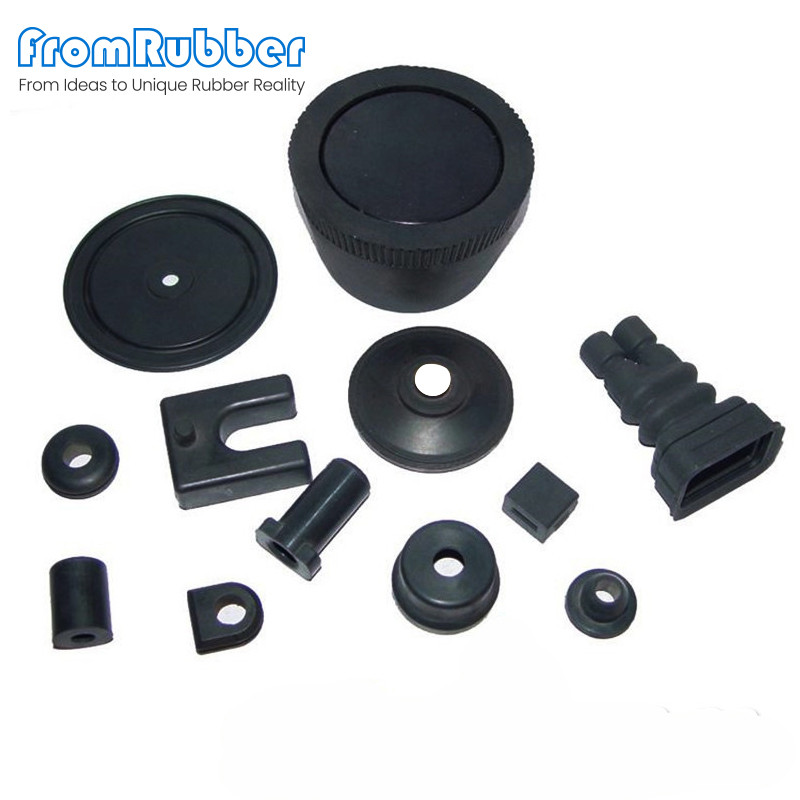
How a miniature gasket is held to tolerance
Miniature gaskets are measured, not judged by eye. Thickness, bead height and groove fit are checked on a sample from each cavity, and a compression-set test tells you what the joint does after a thermal cycle rather than on day one.
We mold under IATF 16949 and ISO 9001 quality systems with ISO 14001 environmental management. Where an IP rating is a contract requirement, the test method and fixture are agreed before the first article, because a gasket that passes on a flat plate can fail on a ribbed housing.
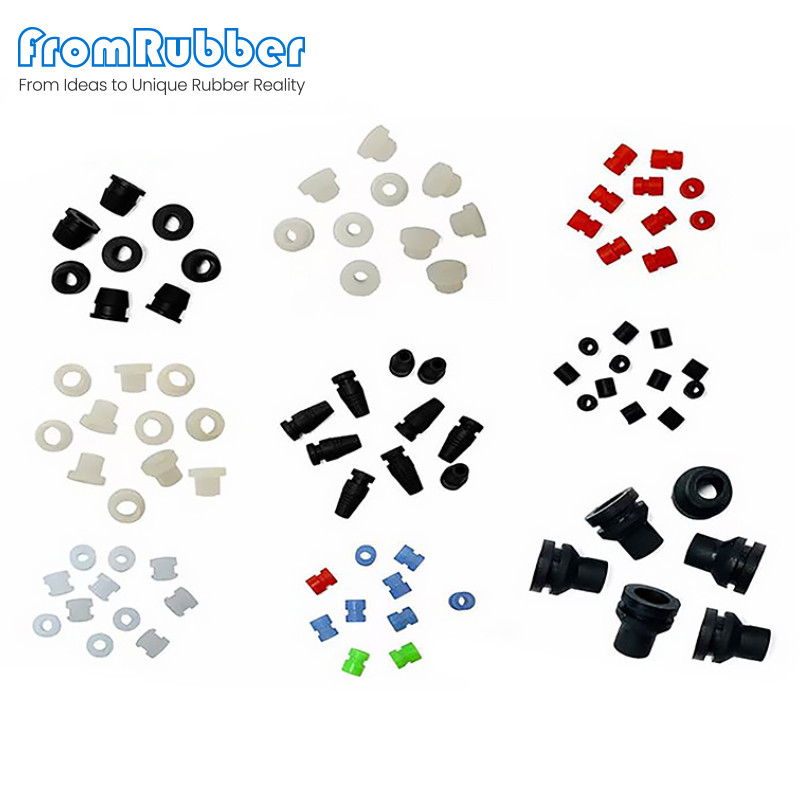
From housing groove to sealed enclosure
The groove, not the gasket, sets the outcome. The four steps start there.
Send the housing and groove
The gasket drawing, or the two housing halves with groove dimensions and screw layout.
Fill-ratio and squeeze check
We calculate groove volume against gasket volume and confirm the compression the joint can actually deliver.
Prototype and fit check
Single-cavity tool and samples in the production compound, with measured thickness and bead height.
Production and first article
Multi-cavity tool, dimensional report per cavity, compression-set data and retained samples.
Instrument gasket questions we answer most often
Short answers for enclosure designers and for failure review on a leaking instrument.
How thick should a small instrument gasket be?
0.8-3 mm covers most instrument enclosures. Below 0.8 mm, tolerance and flash become a larger share of the section, so LSR and a tighter tool are usually required.
Does silicone work for an IP67 enclosure?
Yes, provided the groove is filled to 75-90% and the housing has enough stiffness between screws. The material is rarely the limit; the joint design usually is.
Why does my silicone gasket take a set?
Compression set is normal; the question is how much. High squeeze, high temperature and long dwell all increase it. Reducing squeeze from 40% to 20-25% usually restores recovery.
Molded or die-cut for a small gasket?
Molded for a three-dimensional bead, corner radii or a varying section; die-cut for flat constant-section rings in volume. Miniature enclosures almost always need molded.
Send the groove, get the fill ratio
Send the housing halves or the groove dimensions and we will return the fill ratio, squeeze and section that seal it, plus the flash limit that has to be on the drawing.