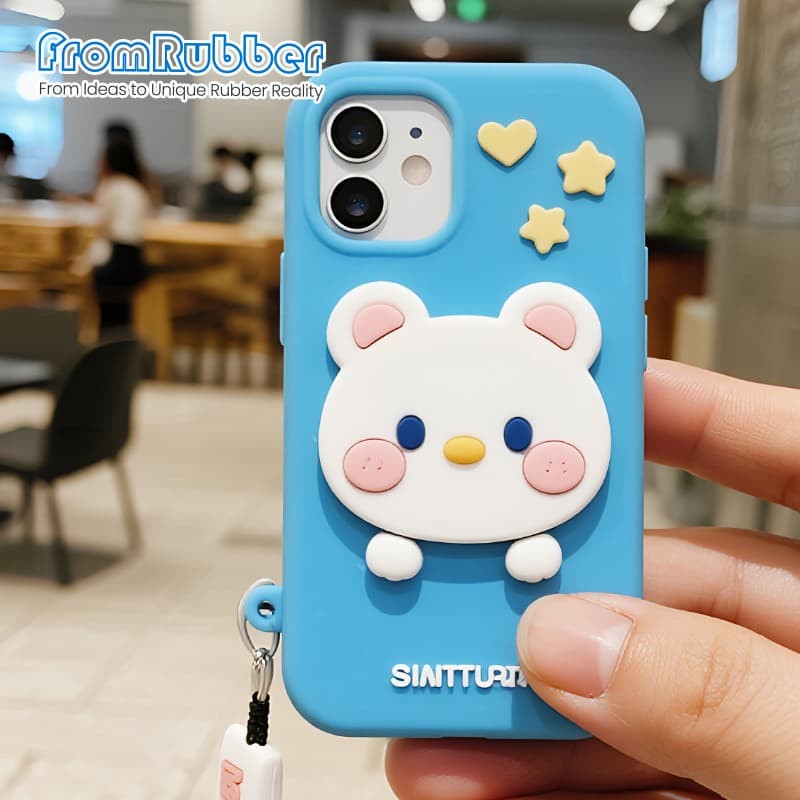
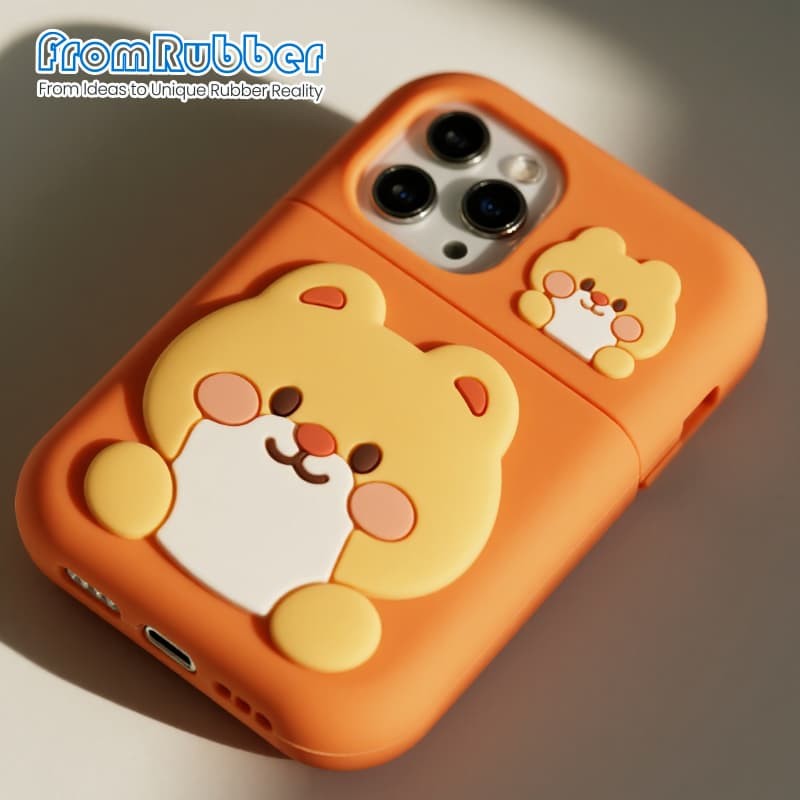
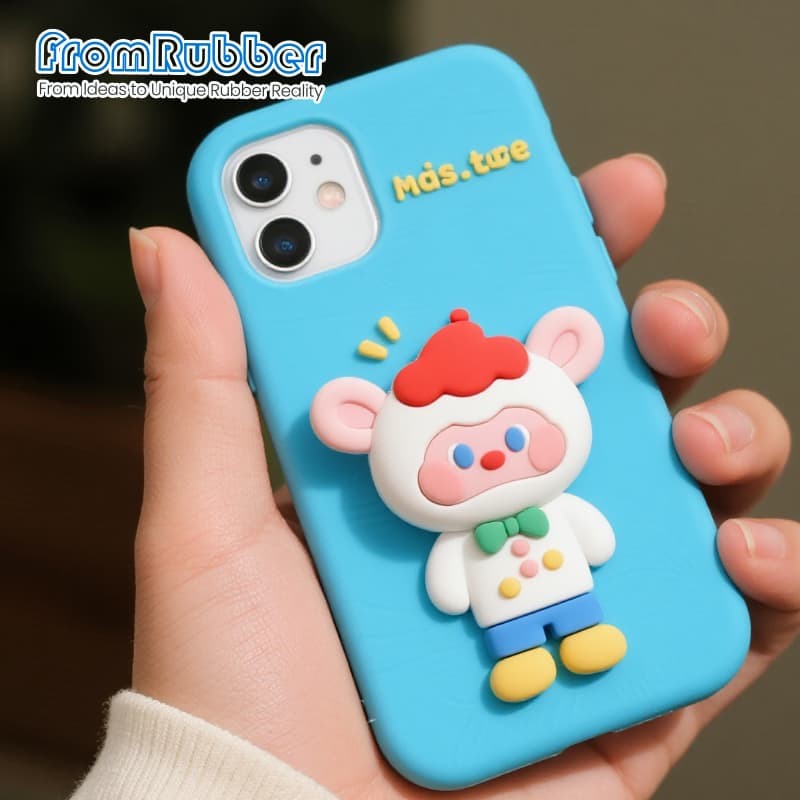
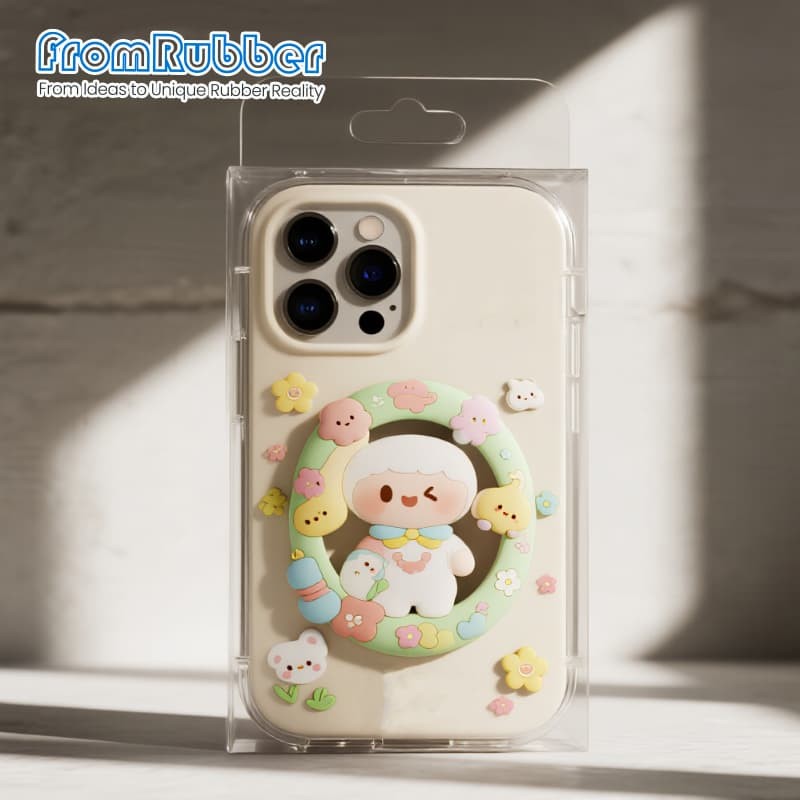
Bold 3D multi-colour silicone phone cases moulded to your drawing, with relief height reviewed against the base wall.
Detailed
Custom multi-colour phone case · 3D relief
Bold relief is a wall problem before it is an art problem
A raised figure that looks spectacular on a render can be the reason a case fails. Material that stands proud of the base wall has to come from somewhere: it either thickens the part and pulls a sink mark on the inside face, or it forces a base wall thin enough to lose shape around the edges.
We mould bold multi-colour phone cases to your device model and artwork, and the first conversation is about relief height against base wall. Getting that ratio right is what makes the design survive demoulding, drop testing and a year of pocket wear.
Relief height reviewed against base wall before quoting
Colour pieces moulded and bonded in the tool, not glued after cure
Camera lip, button pads and port openings drawn from your device model
MOQ 1,000 pcs per design
What bold actually costs
Four constraints show up on almost every 3D case project. Each one is resolved on the drawing.
01
Relief against base wall
A tall figure needs a thick section behind it. If the base wall is thin, the material has to flow a long way into the relief and the cavity fills unevenly at the perimeter.
What you see: short shots or rounded edges on the highest part of the figure, and a case that feels stiff at the back but floppy at the sides.
02
Sink marks on the inside face
Thick masses cool slower than thin walls. The shrink pulls the inner face inward, so the case can sit unevenly against the phone and trap grit.
What you see: a dimple on the inside of the shell behind the figure, and a shadow line on the outer face. Fixed by coring the back of the boss, not by slowing the cycle.
03
Draft and demoulding
Every raised wall needs draft. Vertical sides grip the cavity and tear at ejection; undercuts need a split or a lifter, and each one adds tooling cost.
What you see: whitened stress marks at the base of the figure, or a torn edge that reads as a moulding defect in inspection.
04
Hardness against definition
Softer compound gives better grip and drop absorption but holds less crisp detail. Firmer compound keeps the relief sharp but transmits impact to the phone.
What you see: a design that looks soft and rounded instead of bold, or a case that is stiff enough to crack at the corners on impact.
The rules we apply to a bold design
None of these are aesthetic preferences. Each one prevents a specific defect.
Design point
Rule we work to
Defect it prevents
Relief height
Set against the base wall on your drawing, not against a reference case
Short shots, uneven fill, stiff back
Back of a thick boss
Cored or relieved so the section stays close to the base wall
Sink marks, poor seating, grit traps
Side walls of the relief
Drafted and filleted at the root
Stress whitening, tearing at ejection
Undercuts
Designed out, or accepted with a split tool and its cost
Tooling surprises and torn details
Colour breaks
Placed at a moulded edge, not across a curved face
Bleed and ragged colour boundaries
Flat area for print
Kept flat and low so small type can be printed there
Distorted lettering on a curved relief
Three fit points that decide whether the case stays on the phone
Camera lip. The raised ring around the lens has to clear the lens stack without lifting the back of the case off the phone. Too shallow and the lens touches the table; too deep and the case rocks.
Button pads. Moulded pads only work if the wall over the button is tuned to the switch travel. A bold relief elsewhere on the shell changes how the side wall moves, so button feel has to be checked on the first sample, not assumed from the drawing.
Edge return. The lip that wraps the front bezel is what keeps the case attached in a drop. Relief that runs to the edge removes the material the lip needs, and that is where a case peels off.
Where the extra colours come from
Moulded colour pieces
Eyes, cheeks, bows and lettering are moulded in their own colour and bond during cure. No bond line, no glue, no loose part.
Tinted compound body
The shell colour is in the material, so wear exposes the same colour instead of a pale substrate.
Print for fine type
Small lettering and gradients go on the surface where a moulded stroke would not fill. Kept off raised edges so it does not wear first.
What we advise against: a 3D figure supplied as a separate glued or taped part. It is the lowest-cost way to fake relief and the fastest way to produce a return, because the bond line fails before the shell does.
Relief height in practice
The same construction at different relief depths. In each case the flat land around the design is what carries the print and protects the edge.
Questions from brand and ODM buyers
How tall can the raised design be?
There is no single number. It depends on the base wall, the compound hardness and how much flat edge the case needs for retention. Send the drawing with the base wall stated and we will return the maximum relief it can carry, plus the fillet and draft we would cut. If the artwork needs more height than the wall allows, the wall has to change first.
Is the 3D figure a separate part that gets attached?
No. Colour pieces are placed in the tool before cure and bond into the shell, so there is no adhesive line. This is also why a colour change on a moulded piece requires its own cavity rather than a new print file.
Will the buttons still work with a bold back?
Moulded button pads are tuned to the switch travel, and we verify feel on the first sample with your device. If the relief stiffens the side wall, the pad section changes. We would rather adjust the pad than ship a case that needs a hard press.
Can one tool cover several phone models?
No. Cavity geometry follows the device: camera position, button layout and corner radius all differ. Each model needs its own cavity, so a multi-model programme is quoted as several tools sharing one design language.
Send the drawing with the base wall marked
You get a relief review, a draft and fillet proposal, and a quote that separates tooling from piece price. If the artwork cannot release from a single tool, you hear it before steel is cut.